
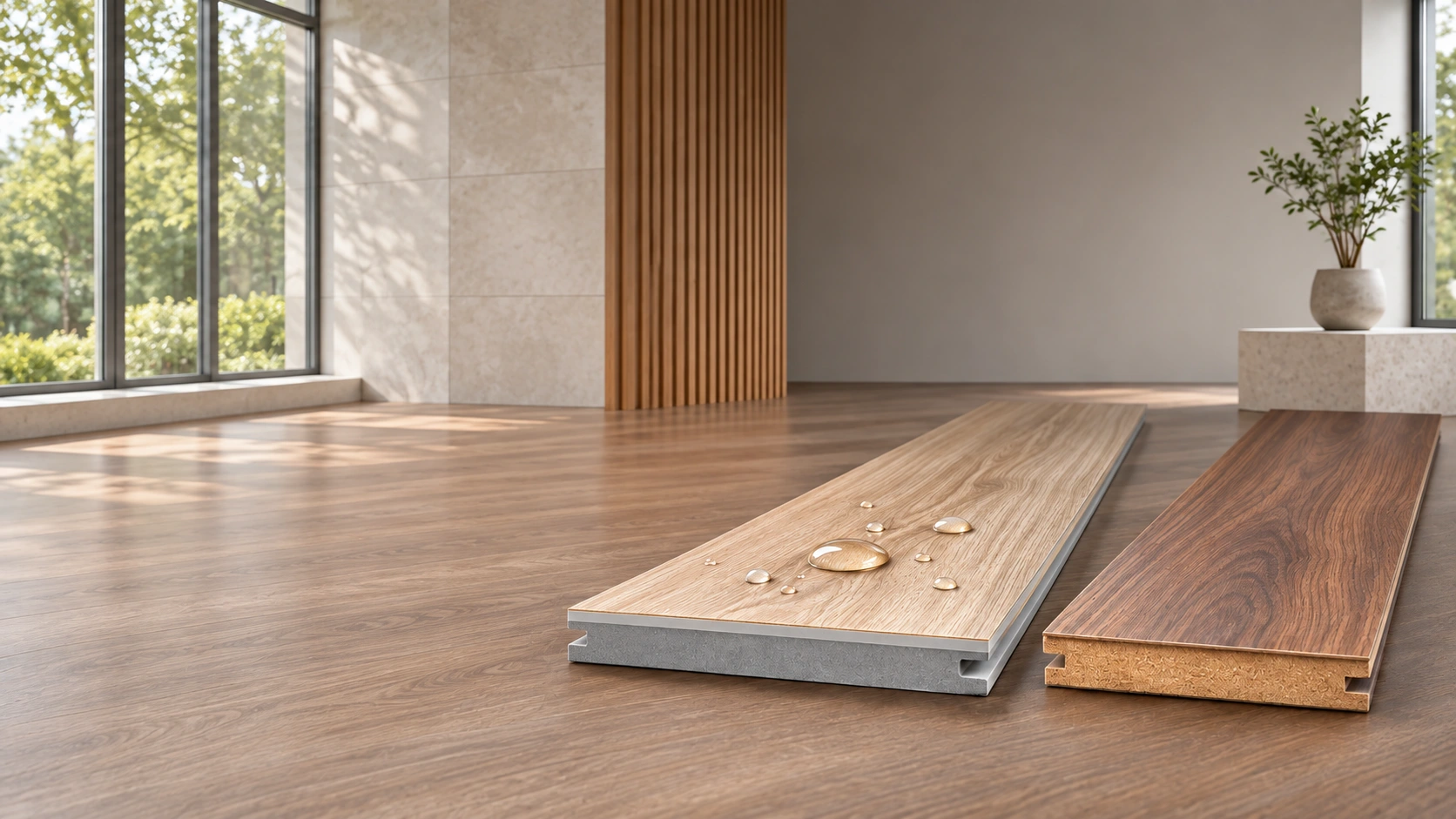
Overview
Compare specific flooring models rather than treating SPC or laminate as a universal performance grade. Appearance alone does not establish suitability for a room, traffic level or installation method.
Core Composition
Laminate commonly uses a high-density wood-fibre core. SPC commonly uses a rigid PVC-based core with mineral filler. Confirm the actual model specification: the core alone does not determine surface durability, joint performance or installation suitability.
Moisture Exposure and Installation Limits
SPC core water resistance does not make the whole installed floor a waterproofing system. Some laminate models have documented water-resistant constructions. Check the selected model’s permitted rooms, spill limits, edge sealing, subfloor moisture and installation requirements. Do not assume either product is suitable for showers, standing water or every wet area.
Dimensional Stability
Both product types have model-specific requirements for expansion gaps, temperature, humidity and subfloor preparation. Underfloor-heating suitability must be confirmed for the particular floor, underlay and heating system. Follow their applicable limits and installation instructions; a rigid core is not proof of unrestricted temperature use.
Durability and Lifespan
Compare the models’ relevant test reports, intended use, surface protection, impact and indentation resistance, joint construction and warranty conditions. A 0.5 mm SPC wear layer alone does not prove that a floor will outlast laminate or suit every commercial load. Maintenance and installation also affect service life.
Conclusion
Choose the documented product and installation assembly that meet the project requirements. Request samples, model data and applicable reports, and confirm quantity, destination, accessories and supply terms. Neither material name establishes a universally better or lower-cost solution.