
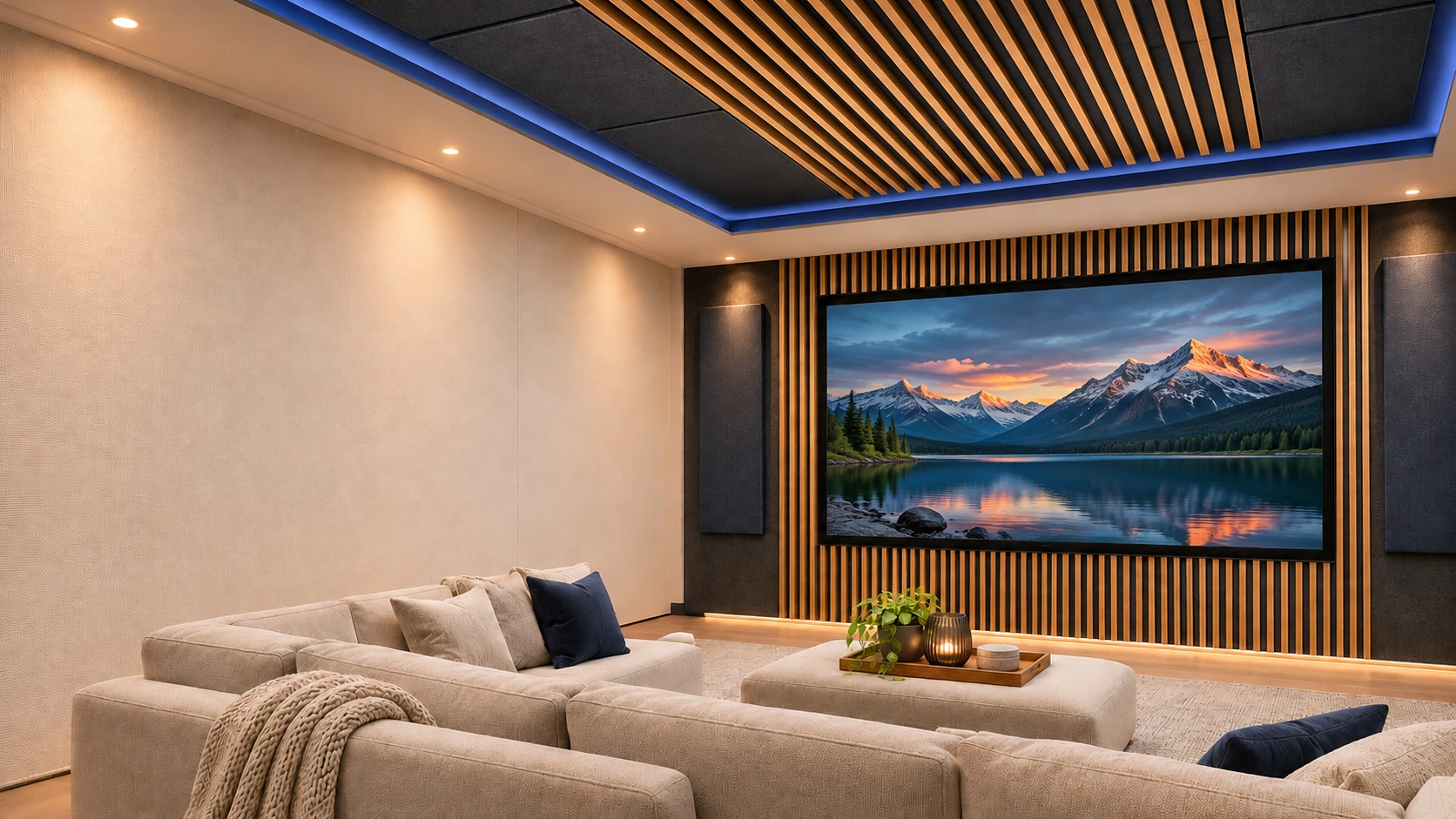
Overview
MDF slat acoustic panels can be an option for finishing and treating selected home-theater surfaces. Select the assembly using room dimensions, speaker and seating positions, acoustic objectives and applicable test data. A product name alone does not establish professional sound performance.
The Acoustic Goals of a Home Theater
Define the room's needs for absorption, reflection control and low-frequency treatment before placing materials. These are different functions, and every slatted panel does not automatically provide them all.
- Absorption: select evidence and treated area for the relevant frequencies and reverberation objective, without promising removal of every echo.
- Scattering: assess reflection paths and appropriate scattering data; a slatted appearance alone does not establish a designed diffuser.
- Low frequencies: the room may need dedicated treatment and measurements; do not infer bass performance from NRC alone.
Assessing the panel assembly
Review frequency-dependent absorption results for the proposed panels, backing, mounting, cavity and infill. MDF slats and felt alone do not establish diffusion performance, bass trapping or sound isolation between rooms. Confirm applicable fire and emissions documentation as well.
Installation Strategies for Home Cinemas
Plan treatment around speakers, the screen, seats and services, then verify the intended room result. Use fixings and supports intended for the product, and do not replace its tested assembly with a universal construction detail.
- Side walls: locate treatment using actual reflection paths and speaker and seating positions.
- Rear wall: assess absorption or other treatment from room geometry and listening distances.
- Cavity and infill: match the proposed test assembly, fixing and fire requirements; do not assume a 50 mm cavity guarantees improved bass.